When it comes to fonts there are many different types than just Ariel, Times New Roman, and…
We ain’t using this anymore. Don’t use this. EVER. There is nothing less professional than comic sans. So we’re going to talk about fonts and how to do them right.
Open Type Fonts
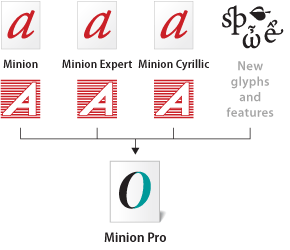
Open type fonts are cross platform font file formats that were developed by adobe and microsoft. The main benefits of open type fonts are it’s cross-platform compatibility (so they can work on both mac and windows pcs), and its ability to support widely expanded character sets and layout features, which provide richer linguistic support and advanced typographic control. Feature-rich adobe open-type fonts can be distinguished by the word “pro”, which is a part of the font name. Open type fonts can be installed and used alongside Postscript Type 1 and TrueType fonts.
Open type fonts significantly simplifies font management and the publishing workflow by ensuring that all of the required glyphs for a document are contained in one cross-platform font file throughout the workflow. Open-type fonts may contain more than 65,000 glyphs, which allow a single font file to contain many non-standard glyphs, such as old-style figures, true small capitals, fractions, swatches, superiors, inferiors, titling letters, contextual, and stylistic alternates, and full range of ligatures.
Postscript Fonts
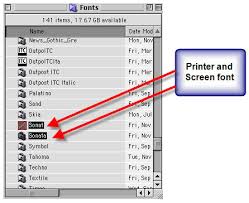
Postscript fonts are generally two main components to Postscript Typefaces. The first file contains the actual Post script typeface itself and is often called the “binary” or “printer file” file. The second file contains the typeface’s complete name, the spacing characteristics and information to help the computer display the typeface on the screen and for printing the font. Both files need to be submitted.
Truetype Fonts
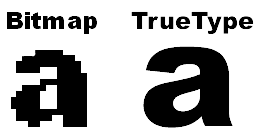
Truetype fonts only require one file to be submitted for each instance of the font. For example, a different file is needed for normal, bold, italic, etc. Truetype typefaces are generally intended for business office use and can be less reliable for publishing applications. Only use Truetype typefaces when the typeface is unavailable in Postscript format.
And now you know a little more about fonts, and how they work. Now go type a good story and remember, DONT USE COMIC SANS.
 Henry Iglesia